
Prof. Dr. Johannes Jüde
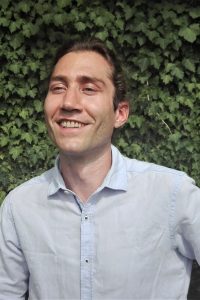
Institute of Political Science
Professorship of International Relations and Political Economics
- Phone number: +49 9131 85-22373
- Fax number: +49 9131 85-22371
- Email: johannes.juede@fau.de
Office Hours
Wednesday 16:15-18:00, please register by mail.
- since October 2025 Acting Professor of International Relations and Political Economy at Friedrich-Alexander-Universität Erlangen-Nürnberg
- 10/2023 to 09/2025 Marie-Skłodowska-Curie-Action Fellow at the School of Social and Political Science, University of Edinburgh
- 09/2019 PhD: Social and Political Sciences, European University Institute, Florence
- since April 2019 Researcher at the Institute of Political Science at Friedrich-Alexander-Universität Erlangen-Nürnberg (on leave until 31.03.2026)
- 07/2014 Master of Research: Social and Political Sciences, European University Institute, Florence
- 09/2013 to 09/2019 PhD-Researcher at the European University Institute, Florence
- 04/2012 to 03/2013 Research Fellow at the Chair of Global Governance at LMU Munich
- 02/2012 Magister Artium Political Science, minor subjects: economics and history at Ludwig-Maximilians-University (LMU) Munich
- 01/2011 Magister Artium Philosophy at the School of Philosophy Munich S.J.
My research focuses on the comparative analysis of processes of state formation and state decay in Sub-Saharan Africa and the Middle East, as well as on the theory and practice of international statebuilding interventions. I am particularly interested in the long-term influence of rebel movements and dynamics of violence on state-building processes. I also develop new work on the role of empires as ordering powers in global peripheries. My publications appear in the European Journal of International Relations, International Affairs, and the Journal of International Relations and Development.
From October 2023 to September 2025 I held a Marie Skłodowska Curie research grant (€ 221,000) and led the research project RebeLeg: Legacies of violence, rebels and post-conflict state formation at the University of Edinburgh.
RebeLeg: Legacies of violence, rebels and post-conflict state formation studies the long-term effect of civil wars and rebel organization on post-conflict state formation trajectories. RebeLeg develops an original analytical framework integrating theories of state formation and research on rebel governance and civil war to systematically answer its core research question: how does the legacy of violent conflict and armed movements impact post-war state-making?
States are crucial for domestic and international stability, yet their emergence remains poorly understood. A vast literature has addressed the external dimension of state-making and debated the potential of international state-building. What this debate has however neglected is that statehood usually does not emerge from, or in the context of, international intervention but instead from domestically-led processes. To fill this gap, RebeLeg examines post-conflict state formation from an inside-out perspective by starting the analysis from victorious rebels engaged in civil wars. Drawing on its novel analytical framework, RebeLeg studies two African regions – the Horn of Africa and Southern Africa – and explains the varying trajectories of post-conflict state formation.
RebeLeg’s results will contribute to a significantly better understanding of post-conflict state formation. These highly relevant findings will facilitate international support for post-conflict states and can inform a new approach, moving away from failing militarized interventions as in Afghanistan or Iraq.
Peer-reviewed Journal Articles
- ‘Making or Un-Making States: When Does War Have Formative Effects?’, in European Journal of International Relations (EJIR) Vol 28: 1 (2022), 209-34.
- ‘The Possibility of State Formation and the Limitations of Liberal International State-Building’, in Journal of International Relations and Development (JIRD) Vol 23: 1 (2020), 92–116.
- ‘Contesting Borders? The Formation of Iraqi Kurdistan’s De-Facto State‘, in International Affairs Vol. 93: 4 (2017), 847-863.
Chapters in Edited-Volumes
- ‘Bildung als politische Aufgabe für die Weltgesellschaf’t, in: Bayerischen Landeszentrale für Politische Bildungsarbeit (Hrsg.): Weltprobleme. 7. komplett überarbeitete Auflage, München (2013), 333-346, (mit Michael Reder).
- ‘Eine stoische Idee für das 21. Jahrhundert? Die globale Erwärmung unter kosmopolitischer Perspektive’, in Buhtz, M. et al. (eds.): Krise der Konflikte. Analysen zur Konflikt- und Krisenhaftigkeit der Gegenwart, Magdeburg/Leipzig (2011), 9-19.
Additional Articles
- ‘Break all the Borders: Separatism and the Reshaping of the Middle East’, in International Affairs Vol. 95: 5 (2019), 1189-1190 (Book Review).
- ‘Contentious Borders: Iraqi Kurdistan After the Independence Referendum’, Blogbeitrag bei International Affairs Blog, 03.10.2017.
- ‘As IS Territorial Dominance Diminishes, What Challenges Lie Ahead for Iraq’s Kurds?‘, Blogbeitrag bei OUPblog (Oxford University Press Blog), 16.07.2017; reposted von OXPOL (The Oxford University Politics Blog), 15.08.2017; reposted und übersetzt als ‘Os desafios dos curdos iraquianos no pós-Estado Islâmico’ von POLITIKE, 16.08.2017.